
-
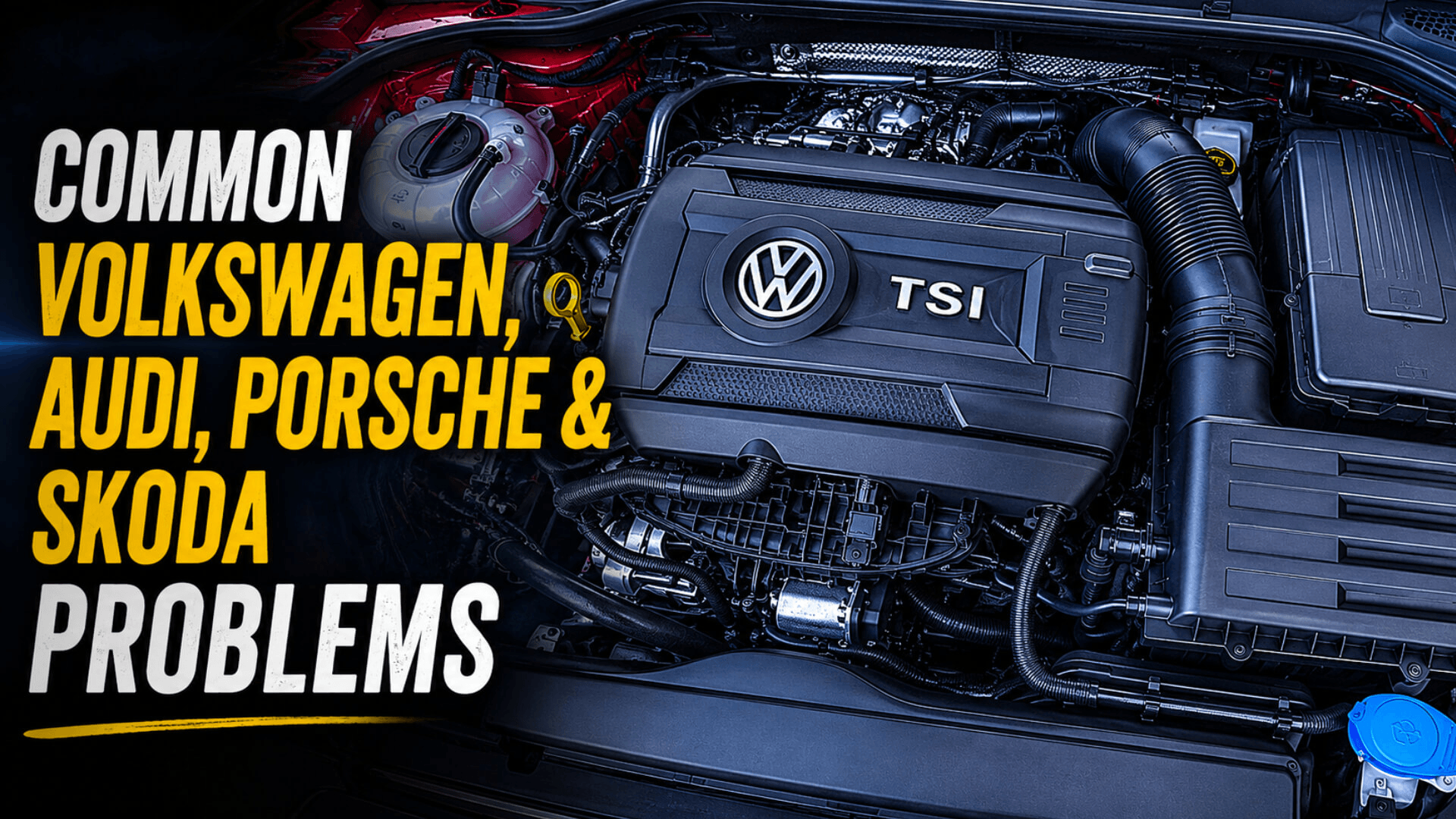
VAG Vehicle Problems We Commonly See Premier Autotune
Common Volkswagen, Audi, Porsche & Skoda Problems We See on the Gold Coast
Volkswagen, Audi, Porsche, and Skoda vehicles are some of the most enjoyable European cars to drive when properly maintained. Platforms such as the Golf GTI, Golf R, Audi S3, Audi RS3, Porsche Macan, Skoda Octavia RS, Tiguan R, and newer Cupra models offer strong performance, excellent drivability, and impressive engineering for both everyday driving and performance use.
However, like all modern European vehicles, there are certain problems that commonly appear as these cars age, particularly in Australian conditions.
At Premier Autotune , we regularly diagnose and repair a wide range of faults across Volkswagen, Audi, Porsche, Skoda, and other VAG-platform vehicles on the Gold Coast. Some problems are relatively minor maintenance-related issues, while others can become significantly more expensive if left too long without proper diagnosis or servicing.
Modern European vehicles are also far more software-driven than many owners realise, which means accurate diagnostics now plays a major role in correctly identifying faults rather than simply replacing parts based on fault codes alone.
Cooling System Leaks and Water Pump Failures
Cooling system faults are one of the most common issues we see across modern Volkswagen, Audi, Skoda, and Porsche platforms.
This is especially common on EA888-powered vehicles such as the Golf GTI, Golf R, Audi S3, Skoda Octavia RS, Tiguan R, and Porsche Macan models using VAG-derived turbocharged engines.
Common leak points include water pumps, thermostat housings, coolant flanges, auxiliary coolant pumps, and plastic coolant pipe connections.
In many cases, the problem begins as a slow coolant leak that may initially only produce a coolant smell, minor coolant loss, or occasional low coolant warnings.
Queensland heat and heavy traffic conditions place additional stress on cooling systems, particularly on tuned or performance-driven vehicles. If cooling system faults are ignored for too long, overheating and secondary engine damage can eventually occur.
DSG, S-Tronic & PDK Transmission Problems
Modern DSG, S-Tronic, and Porsche PDK transmissions perform exceptionally well when maintained correctly, but they are one of the areas where servicing becomes extremely important.
Common transmission-related complaints we see include clutch shudder at low speed, harsh shifting under load, delayed engagement, hesitation during acceleration, warning lights, and mechatronic-related faults.
Many of these problems become worse once servicing intervals are ignored for too long.
On tuned vehicles, transmission servicing becomes even more important due to the additional heat and torque load placed on clutch packs, hydraulic systems, and transmission fluid.
Modern transmissions such as the DQ200, DQ250, DQ381, DQ500, S-Tronic, and Porsche PDK systems are highly capable, but they rely heavily on correct servicing procedures, software calibration, adaptation values, and fluid condition to continue operating properly long term.
PCV Valve and Breather System Problems
PCV and crankcase ventilation faults are another common issue across turbocharged Volkswagen, Audi, Porsche, and Skoda platforms.
Symptoms can include rough idle, oil leaks, increased oil consumption, whistling noises, lean running faults, and boost pressure irregularities.
In some cases, failed PCV systems can create drivability problems that are often mistaken for turbocharger, ignition, or fuel system faults.
These systems become increasingly important on tuned vehicles where crankcase pressure and boost levels are higher than factory calibration.
Ignition Coil and Spark Plug Failures
Ignition system faults are extremely common across modern turbocharged European vehicles.
Failing ignition coils or worn spark plugs can cause misfires under load, hesitation during acceleration, rough idle, reduced performance, and check engine lights.
This becomes even more noticeable on tuned vehicles where cylinder pressure and ignition demand are significantly higher than factory operation.
Using the correct spark plugs, maintaining proper servicing intervals, and carrying out accurate diagnostics becomes increasingly important once performance levels increase.
Oil Consumption and Oil Quality
Oil quality plays a major role in the long-term reliability of modern turbocharged European engines.
Extended servicing intervals, Queensland heat, stop-start traffic, and tuned vehicle operation all place additional stress on engine oil over time.
Using the correct oil specification is particularly important on Volkswagen, Audi, Porsche, and Skoda platforms due to turbocharger temperatures, direct injection operation, timing chain systems, and variable valve timing components.
We regularly see vehicles where overdue servicing or poor oil quality contributes to increased engine wear, sludge build-up, timing system faults, or excessive oil consumption.
Preventative servicing is usually far more cost-effective than waiting for larger faults to develop.
Battery and Electrical System Faults
Modern VAG vehicles are extremely sensitive to battery condition and voltage stability.
Weak batteries can often trigger multiple warning lights, communication faults, steering warnings, transmission faults, sensor communication errors, and start-stop system problems.
Many owners are surprised how often low battery voltage contributes to seemingly unrelated vehicle faults.
Modern battery systems also commonly require battery coding and registration procedures after replacement to ensure correct charging behaviour and energy management operation.
Diagnostics Matter More Than Ever
One of the biggest misconceptions with modern European vehicles is assuming fault codes automatically identify the failed component.
In reality, fault codes are often only the starting point of the diagnostic process.
Modern diagnostics may involve monitoring live data, checking adaptation values, testing module communication, verifying software compatibility, analysing fuel pressure behaviour, checking boost control operation, and following guided manufacturer fault-finding procedures.
Simply replacing parts based on generic fault code descriptions can quickly become expensive without resolving the actual issue.
This becomes even more important on tuned vehicles and newer software-driven platforms.
Why Specialist Knowledge Matters
Modern Volkswagen, Audi, Porsche, Skoda, and Cupra vehicles are far more electronically integrated than older platforms.
Systems such as DSG and S-Tronic transmissions, Porsche PDK systems, adaptive suspension, Virtual Cockpit systems, radar cruise control, ADAS safety systems, ECU and TCU communication, and component protection all require specialist diagnostic capability and platform-specific experience.
At Premier Autotune , we use professional VAG diagnostic systems together with factory repair information, wiring diagrams, guided fault-finding procedures, coding capability, and online manufacturer resources to properly diagnose and repair modern European vehicles.
Volkswagen, Audi, Porsche & Skoda Specialist – Gold Coast
Premier Autotune specialises in diagnostics, servicing, repairs, coding, programming, DSG servicing, ECU and TCU tuning , and advanced fault diagnosis for Volkswagen, Audi, Porsche, Skoda, Cupra, and other European performance vehicles across the Gold Coast.
Whether the issue involves drivability concerns, warning lights, DSG problems, cooling system faults, tuning-related issues, or complex electrical diagnosis, accurate diagnostics and platform-specific knowledge are critical to properly repairing modern European vehicles.
Frequently Asked Questions
Some of the most common issues include cooling system leaks, DSG transmission faults, carbon build-up, PCV valve failures, ignition coil problems, and electrical communication faults.
Modern VAG vehicles rely heavily on software integration, module communication, coding, and electronic control systems. Proper diagnosis often requires dealer-level diagnostic capability and platform-specific experience.
Most wet-clutch DSG systems should generally be serviced every 60,000 kilometres, with shorter intervals often recommended on tuned or heavily driven vehicles.
Yes. Modern Volkswagen, Audi, Porsche, and Skoda vehicles are very sensitive to battery voltage. Weak batteries can often trigger multiple communication and system faults across different modules.
Not necessarily. Properly tuned vehicles with correct servicing, diagnostics, cooling performance, and maintenance can remain very reliable. However, tuned vehicles generally require more disciplined servicing and monitoring than factory-standard vehicles.